PRODUCT LINE
Turnkey Electrostatic Powder Coating Lines
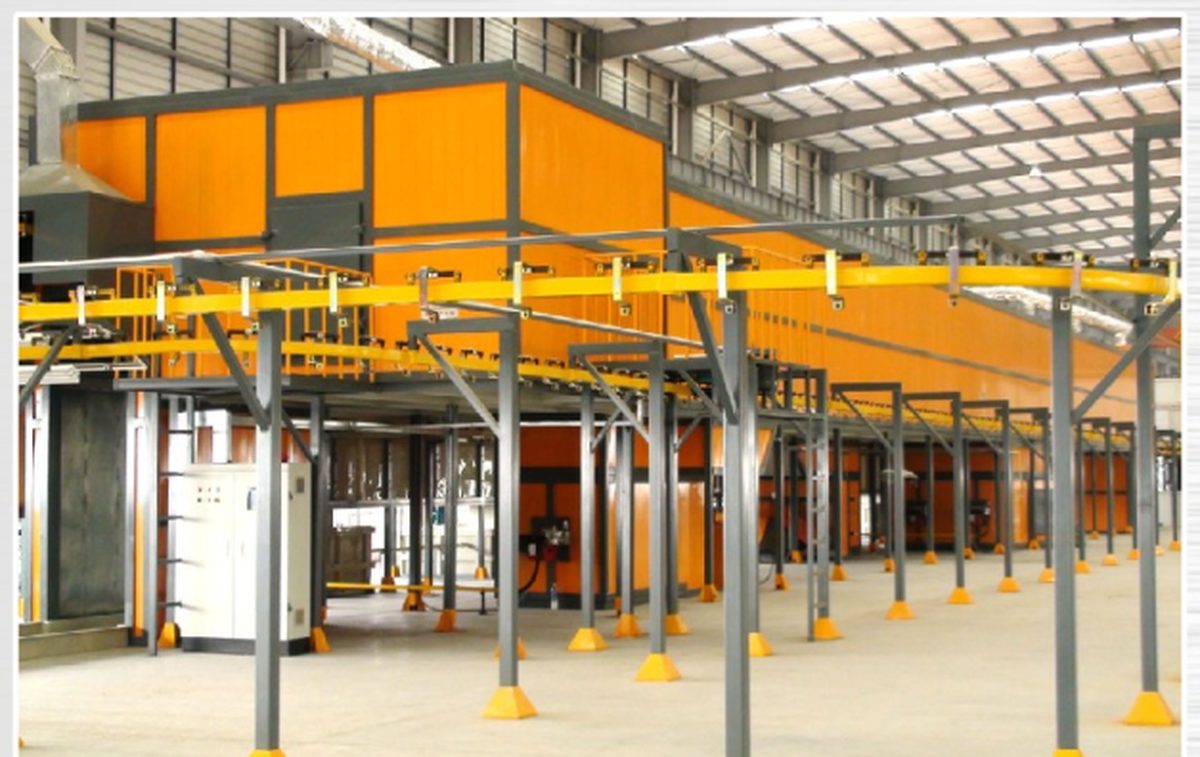
A powder coating line is a chain of matched stations, not a list of separate machines. We engineer pretreatment, booth, recovery, curing oven and conveyor around one workpiece, one output target and one factory layout.
Every line starts from four numbers: the largest workpiece (L x W x H), the coating type (epoxy, polyester, hybrid or special effect), the required output per shift, and the floor space you have. From those we size the number of pretreatment stages, the booth width and gun count, the oven length, and the conveyor speed and pitch.
Configurations run from a compact single-booth line for small batches to a fully automatic multi-booth line with reciprocators, fast colour change and automatic powder feeding. Heating can be LPG, natural gas, diesel or electric depending on what is available and cheapest on your site.
The line is assembled and test-run at our production base before shipment. You get the layout drawing for approval, weekly production photos, a trial-run video, and full installation drawings for your local rigging team.
What is included
- Pretreatment with 3, 4 or 5 stages, dipping or spraying type
- Powder booth with cyclone, mono-cyclone or cartridge recovery
- Curing oven sized by coating chemistry and line speed (typically 180-200 C)
- Overhead or power-and-free conveyor, 0.5-6 m/min
- PLC with touch-screen control and recipe storage
- Pre-shipment trial run with video report
Typical specifications
| Item | Typical specification |
|---|---|
| Line speed | 0.5 – 6 m/min, variable |
| Workpiece size | custom, typically up to 1500 x 1000 x 800 mm |
| Pretreatment stages | 3 – 5 (degrease, rinse, conversion coat, passivation) |
| Curing | 180 – 200 C, 15 – 20 min metal temperature |
| Heating options | LPG / natural gas / diesel / electric |
| Control | PLC with touch screen and fault alarms |
Models in this range

Not sure which configuration fits your parts?
Send us your workpiece size, coating type and required output per shift. We reply with a line proposal and a budget range within one working day.
Where powder coating lines are used
Electrostatic powder coating suits any metal part that needs a hard, uniform, corrosion-resistant film and can pass through an oven. In our export projects the most common product families are:
- Metal furniture, shelving, lockers and racks
- Electrical enclosures, switchgear and control cabinets
- Automotive and motorcycle parts, brackets and shock absorbers
- Home appliances: fridge panels, washing machine drums, oven bodies
- Architectural profiles, fencing, gates and aluminium frames
- Agricultural machinery, pumps, valves and pipe fittings
If your part is heat-sensitive, heavier than the conveyor can carry, or needs a metallic or high-gloss finish, tell us at the quotation stage — that usually points to a liquid painting line instead.
Five numbers that decide the line size
- Largest workpiece (L x W x H, plus hanger height) — sets booth width, oven opening and conveyor pitch.
- Output per shift in m² or pieces — sets line speed and the number of booths and guns.
- Coating type and film thickness — epoxy, polyester, hybrid or special effect, and 40–120 µm target.
- Heat source available on site — LPG, natural gas, diesel or electric; we size the burner and oven accordingly.
- Floor space and ceiling height — decides whether the line runs straight, in an L shape, or with a return loop.
Send us these five numbers with a photo or drawing of the part and we will come back with a layout drawing, a machine list and a price in one document — usually within two working days.
Frequently asked questions
How long does a powder coating line take to build and deliver?
Standard single-booth lines normally take 35–50 days from drawing approval to shipment; multi-booth automatic lines with fast colour change take 50–75 days. Sea freight to the Middle East is about 25–30 days, to South America 30–40 days.
Can the line run on the power and gas we already have?
Yes. Before we finalise the electrical drawing we ask for your site voltage (380 V / 415 V / 440 V, 50 or 60 Hz) and the heat source you can supply. Burners, motors and the PLC are selected for that, so no step-down transformer is needed on site.
Do you install and commission the line?
We can send an engineer team for installation supervision and commissioning, or supply full drawings and a video commissioning guide for your own rigging team. Both options are quoted separately, and the choice is yours.
What about spare parts and after-sales?
Guns, venturi tubes, powder hoses, filters, thermocouples and PLC spares are kept available for at least 8 years after delivery, and we ship small parts by air courier so a line is never stopped for a long time.
Is a trial run done before shipment?
Yes. The line is assembled and run at our production base, and you receive a video of the trial run together with photos of the packed shipment before the containers leave.
Buying guides for this equipment
Before you sign, three questions decide the outcome: what the equipment costs, how to size it for your parts, and what the contract should guarantee. These guides answer them with the numbers we use.
See a powder line running
This is the same line layout we quote: overhead conveyor, recovery booth and tunnel oven working as one unit. Your part size decides the chain speed, hanger pitch and oven length.
Powder coating system — Full line running: load, booth, oven, unload.
Transformer radiator projects
Radiator panels are the hardest case for a powder line: dense fins, weld oil, mixed heights. Five projects are written up here – transformer radiator coating case studies.
Related equipment in a powder line
Most powder lines are built from the pages below. Open the one you need, or send us your part drawing and we will match the combination for you:
Pretreatment · Powder coating booth · Curing oven · Conveyor · Reciprocator · Liquid painting line
Electrical control: built to be serviced
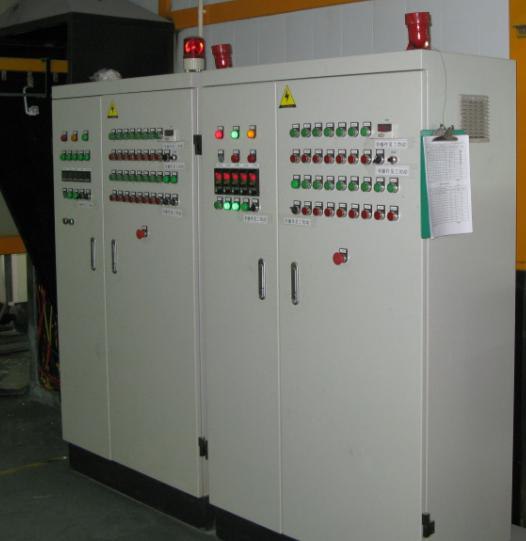
The control panel is where a coating line is easiest to cheapen and hardest to repair. Ours is built around one rule: a local electrician, with the drawing set, should be able to find a fault without calling China.
What is in the panel
- Brands you can source locally: Siemens, Mitsubishi and Schneider for PLC, contactors, breakers and drives. No proprietary board that only one supplier can replace.
- Touch screen HMI with the line mimic on one page: conveyor speed, zone temperatures, fan status, burner status, alarms.
- One digital temperature controller per zone, so a zone can be isolated and serviced while the rest of the line runs.
- Variable frequency drives on conveyor and fans, which keeps the line speed adjustable instead of fixed by a gearbox.
- Gas detection and alarm interlocked with the burner, plus emergency stop and an indicator tower at each operating position.
- MES interface reserved. The terminal position and protocol are left ready, so the line can be connected to your production system later without replacing the panel.
Wiring discipline
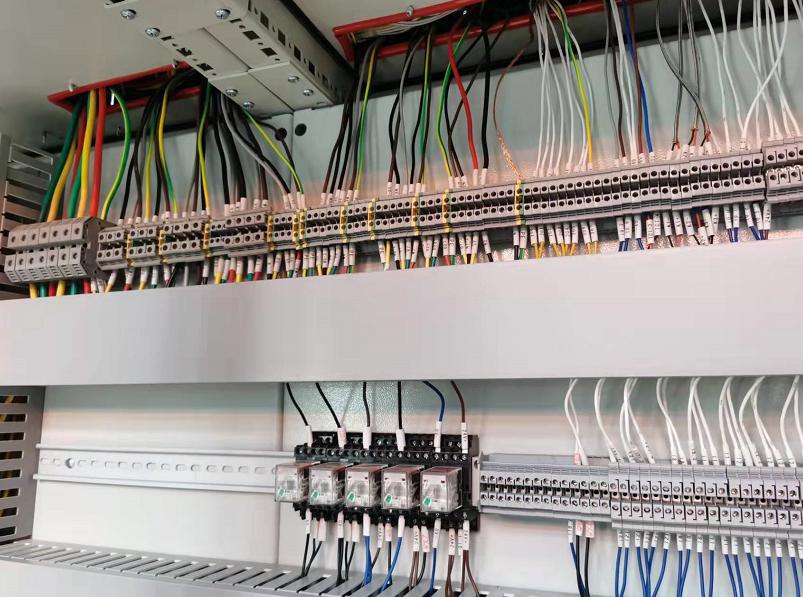
Every core in the cabinet is numbered and ferruled, and the numbers match the drawing set that comes with the line. Terminal blocks are grouped by function, power and control are separated, and the cabinet interior is laid out so a technician can reach a terminal without removing half the wiring. This is the detail that decides what an unplanned stop costs you two years from now.
What you receive
Electrical schematic, terminal list, PLC I/O list, parameter record for the drives and controllers, and the oven temperature profile charts. Documentation is part of the delivery, not an optional extra.
Full detail: electrical control system for coating lines.