PRODUCT LINE
Curing Ovens and Dry-Off Ovens
Oven design is where coating lines quietly lose money: uneven temperature gives colour variation, short dwell gives under-cured powder, thin insulation gives a gas bill you cannot control. We size ovens from coating data, not from a catalogue.
Powder curing needs the metal itself to reach 180-200 C and hold for 10-20 minutes, so oven length equals line speed times dwell, plus entry and exit zones. We calculate the heat load from part weight, hanger load and conveyor speed, then size the burner and circulation.
Construction: rock-wool insulated panels at 100-150 mm, galvanised or stainless inner liner, slot or nozzle air distribution keeping spread across the load within 5 C.
Heat sources: LPG or natural gas burner, diesel burner, or electric elements. Where gas is unavailable electric is cleaner but the running cost must be checked against local tariffs – we calculate both for you.
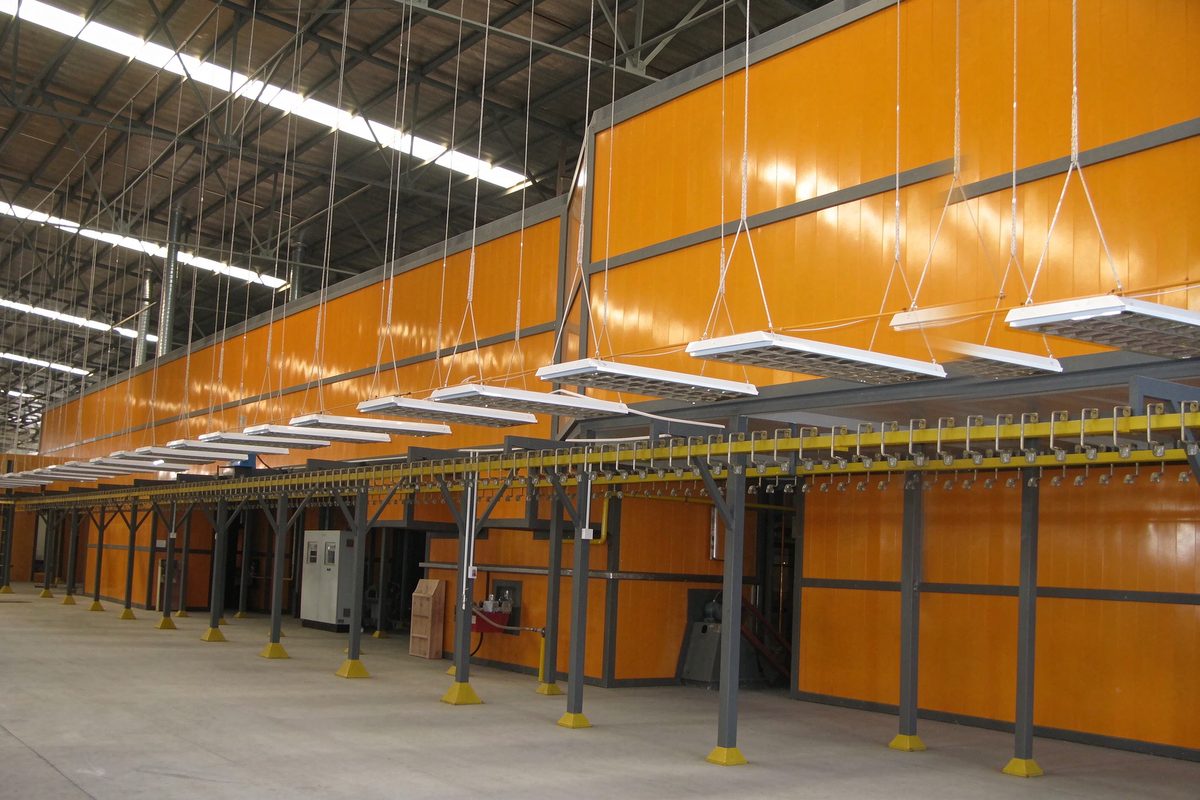
What is included
- Tunnel (conveyorised) or batch chamber
- Gas, diesel or electric heating with PID control
- Rock wool insulated panels, 100-150 mm
- Air circulation keeping the load within 5 C
- Entry and exit heat barriers with exhaust hood
- Thermocouple recording and over-temperature alarm
Typical specifications
| Item | Typical specification |
|---|---|
| Type | tunnel or batch |
| Curing temperature | 180-200 C powder / 140-160 C liquid |
| Dwell | 10 – 30 min |
| Insulation | rock wool 100-150 mm |
| Heating | LPG / gas / diesel / electric |
Not sure which configuration fits your parts?
Send us your workpiece size, coating type and required output per shift. We reply with a line proposal and a budget range within one working day.
Curing oven or dry-off oven — what the difference means
A curing oven takes the coated part to the temperature the powder or paint needs to cross-link, then holds it there for the specified time. A dry-off oven only removes water from the part after pretreatment, so it runs cooler and much shorter. Mixing the two up is the most common reason a line under-cures or over-bakes parts.
- Curing ovens: typically 180–200 °C for powder, 140–180 °C for liquid paint
- Dry-off ovens: typically 100–150 °C, sized for part surface area
- Heat source: LPG, natural gas, diesel, or electric elements
- Construction: rock-wool insulated panels, stainless or galvanised inner skin
Oven length is calculated from line speed and dwell time, and the burner is sized from part mass plus conveyor load — not from a fixed model number. Temperature uniformity across the tunnel is checked during the trial run and recorded in the report.
Data we need to size an oven
- Line speed in m/min and hanger pitch
- Part weight and the number of parts per hanger
- Coating type and the dwell time your powder or paint supplier recommends
- Heat source available and its calorific value or electrical capacity
- Available length in the hall and the ceiling height
Frequently asked questions
Gas, diesel or electric — which is cheaper to run?
It depends on local energy prices. In most Middle East and Southeast Asian plants LPG or natural gas is the cheapest per kWh; in Europe electric with efficient elements can be competitive. We size the burner for the fuel you have and can quote two options side by side.
How do you keep the oven from over-heating light parts?
The oven is divided into zones with separate burners and thermocouples, and the control recipe adjusts each zone. A cooling zone before unloading prevents parts from being packed while still hot.
Does the oven need a conveyor inside?
Usually the same overhead or power-and-free conveyor passes through the oven, with a slot in the roof insulated by a curtain. Stand-alone batch ovens with trolleys are also available for small production.